Torah
It would be difficult for us to embark on our Torah walk without first understanding what Torah is, and how it relates to our lives. For those of you who are just beginning this journey, an explanation and definition will help.
Torah is used to describe the first five books of what we know as the Old Testament (the Tanakh), the five books that many Bible scholars believe were written and compiled by Moses. However, Torah often relates to the entirety of Elohim’s Word, especially if we believe that “ALL Scripture is breathed by Elohim and profitable for teaching, for reproof, for setting straight, for instruction in righteousness” **(2Tim 3:16, emphasis mine).
The Hebrew word torah (Strong’s H8451) is more correctly translated as instruction or direction, instead of ‘the law’, as most of us have been taught. It is derived from the word yarah (Strong’s H3384), which paints a picture of an archer releasing an arrow toward a target. The connotation is that the instructions of Torah will always lead us to ‘hitting the bull’s eye’, of always leading us in the right direction, of leading us to walk in the ways of our Creator.
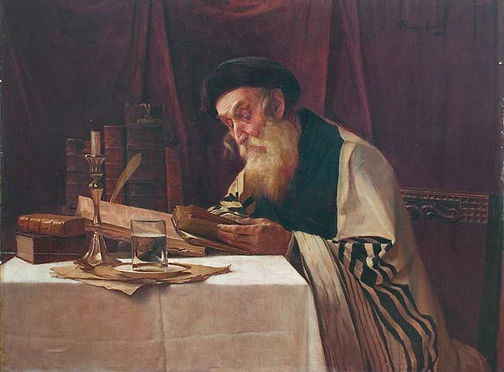
It stands to reason then, if we are to be successful in our Torah walk, we need to know and understand what is required of us. For this, we need to turn to the Jewish people, for they have been accurately studying the writings of Torah for millennia. Hence, the reading of the weekly Torah portion is important.
Sometime in the 6th century BCE, during the Babylonian captivity, the Torah was divided up into weekly portions, or parashah, which would be read every Shabbat in the communal gathering. What has come down through the centuries to the system that is used today is an annual reading cycle, beginning on the feast day known as Simchat Torah (following the feast of Sukkot, in the fall of the year), and ending the following year also on Simchat Torah. Traditionally, the last parashah of Deuteronomy is read on this day, together with the first section of Genesis, reinforcing the belief that Torah is a circle, and never ends.
There are 54 weekly parashot (plural of parashah), each having their own Hebrew name, taken from the first words of the first verse of that parashah. There are also select readings for each of the Feast Days, called “appointed times”, found in Leviticus 23. Because the Jewish calendar is a lunar calendar, with occasional ‘leap years’ to allow it to match with the solar calendar, there are times when some of the shorter parashah are grouped together, in order to make the reading cycle fit into the correct time frame.
Following the weekly reading from the Torah, there is also read what is called haftarah, meaning the ‘concluding portion’, or ‘the ending’. Ancient Jewish wisdom believes that these readings came into existence during a time of intense persecution, when the Jews were not allowed to read/study Torah. Supposedly, they were allowed to read those scrolls that contained the writings of the Prophets, and this schedule was adopted to remind them of the actual Torah parashah that was to be read during that given week. The reading of the haftarah has continued ever since.
I will be posting the weekly parashah, conveniently divided up into daily readings, every Sunday on this site, for those who wish to further their studies of Torah.
“Blessed are You, Yahweh our Elohim, King of the universe, who sanctified us with His commandments and commanded us to engross ourselves in the words of the Torah.” (Traditional prayer spoken before Torah study)
**Most of the Scripture verses that are used on this website are from "The Scriptures 2009", Copyright© 1993-2016 by the Institute for Scripture Research (ISR). All rights reserved. Other translations are identified as such.